The ceiling inside the dome of the U.S. Capitol

Category: Blog Page 12 of 18

For D.C.'s DukeEngage Students, Science and Society are Two Sides of the Same Coin


Duke’s Science&Society program tries to pluralize the world of science. In order to magnify the social benefit of scientific progress, Science&Society endeavors to make it more accessible, just, and integrated into society.  But uses of the word ‘science’ are vast, and the use of ‘science’ in the policy world is even more nebulous. With working definitions of ‘science’ and the scientific process are so easily misconstrued in national policymaking, Duke’s Science&Society program has collaborated with DukeEngage to train the next generation of health leaders to engage the policy machine and vice versa.

Their research encompasses genome ethics, health and medicine, law and policy, neuroscience and society, engineering and technology, and the social and humanistic studies of science. The program and its corollaries understand that health issues are innately complex and require multiple lenses to be both robust and long-lasting.

For example, Science& Society studies how issues of money, politics, race, sex, and culture affect sports entertainment and its role in society. They study the relationship between how food, fat, and urban life contribute to rising rates of obesity and diabetes in India. Traditional studies of public health as a purely hard-science issue paints half the picture. Science&Society renegotiates the boundaries between scientific study and anthropological study in order to truly understand the problems afflicting local communities.

Reflecting the greater mission of Science&Society, this summer’s DukeEngage students are not simply fulfilling internships, they are combining fields and interests. “Academically, I have been trying to synthesize my major—Economics—with my career aspiration of working in the medical field, so that I can hopefully be a more effective and thoughtful physician… I became involved in this program to take on thinking about this topic of science policy and, in the future, to hopefully apply insights from this program to be able to help others without making the mistakes that some scientists and policymakers do” said Economics major William Song (T’19).

The DukeEngage program aims to bridge the gap between scientific research and the policy establishment. But as anyone remotely involved in politics knows, it often feels as if the political process itself is the hurdle. Chief among the causes is a lack of trained scientists holding office in the three branches of government, according to Song.

This dearth leads to simple translation errors and difficulties navigating uncommon and innovative research: “For scientists, communicating scientific findings accurately and in an interesting way to nonscientists seems to be a challenge. For policymakers, understanding science and being aware of the dangers of misinterpreting data seems to be a challenge. A broader understanding of science policy would hopefully push scientists to consider policy questions and policymakers to be able to effectively use scientific evidence” said Song.

However, the students are not spending their entire summers hammering away at memos and in policy meetings; they are navigating how science is (or isn’t) used in specific fields. According to the Science&Society DukeEngage Program Director Thomas Williams J.D., “we have been able to secure a private visit to the Supreme Court for a discussion of science policy, and we spent a day in Annapolis, Maryland meeting with state government policy makers. In both cases, we were able to engage in meaningful discussions about the process and substance of science policy. Another highlight was a visit to the NPR studios, where the group had the opportunity to meet with the science journalist Joe Palca, to discuss his work and the relationship between media, science and policy.”

A lawyer by training, Williams developed an interest in bioethics in law school, spending his spare time reading about the field and catching up on current events. He chose his law school, the University of Pennsylvania School of Law, because it offered a joint J.D./Masters in Bioethics program. While pursuing a post-doctoral fellowship at Duke Law, he helped launch the SciPol website, an online resource that tracks upcoming science policy issues. When he heard the Science&Society program was taking over the DC Duke Engage program Williams “jumped at the opportunity to engage with undergraduate students and return home to my old stomping grounds in the DC metro area.”

Any DukeEngage program demands students dive into a world outside their ken. But DukeEngage’s Science&Society summer in Washington, D.C. drops students into the jungle of American policymaking and all the animals who come with it. During their two months in D.C., students serve at government agencies, NGOs, non-profits and lobbying organizations where they assist with the analysis of policy questions, formulate policy options, and make choices at a national level regarding science policy.

As with many Duke summer programs, students hopefully draw from what they have learned in the classroom and apply it to real-world situations. This program is as much about science and society as it is about science in the service of society. If the goal of Science&Society is to maximize the social benefit of scientific progress by making it more accessible, just, and integrated with communities, then this year’s DukeEngage students have already prevailed simply by being a part of the greater policy conversation.
Budgetary Battlefield

John Shinkle/POLITICO

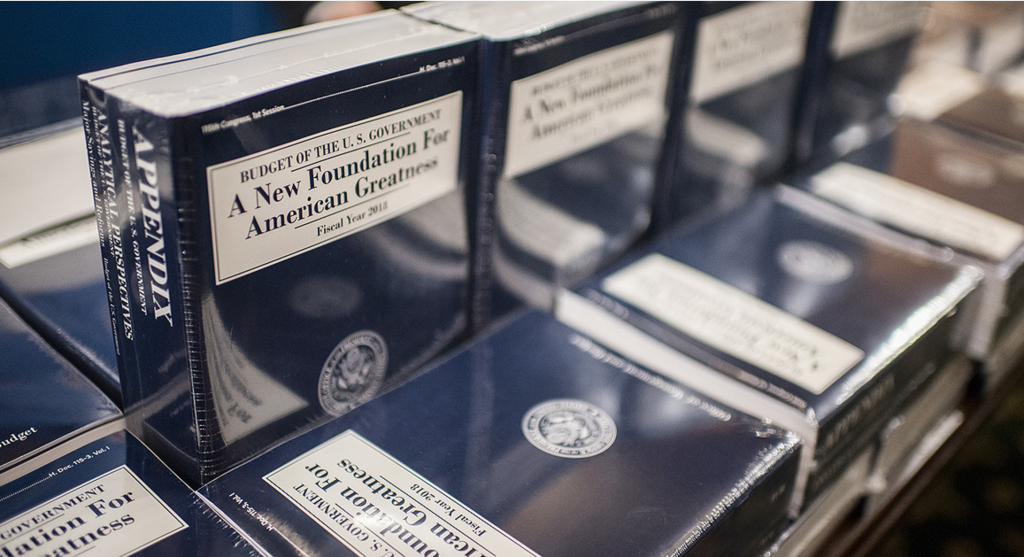
Politics is the allocation of resources by other means. And scarcely is that more true than in the writing of a federal budget. As President Trump unveiled his own proposal for FY18, every other interested party will begin to do the same. The Presidential budget is simply the first step in an arduous exercise in government haggling.

The president’s budget is essentially his wish list to push lawmakers in a direction he sees fit, but as anyone can tell you, directing Congressmen is like herding cats. Everyone has a different constituency with different needs and different strengths.

As the Office of Government Relations will readily remind the Duke community, budgets are a process, not an order. This process, as with so much of our current political ecosystem, will likely be dominated by hot rhetoric and divisive actions. The president’s budget has already met strong opposition from lawmakers and interest groups alike. Research funding has strong bipartisan support in both houses of Congress.

ederal research funding touches many lives across the country and Duke finds itself allied not simply with universities of similar calibre but also with the tech industry, energy and environmental groups, health care entities, NGOs and a myriad of private advocacy groups.
The following analysis pays attention to programs with strong bearing on Duke’s research enterprise.

The National Institutes of Health (NIH) budget would be cut by 21 percent from 2017 spending levels, down to $26 billion. The National Cancer Institute, which falls under the NIH umbrella, would see a budget cut of 19 percent as would almost all NIH institutes. This is identical to the proposed ‘skinny’ budget. It should be noted that this proposed cut came weeks after Congress gave the biomedical research agency a $2 billion boost in its 2017 spending bill.

The presidential proposal wraps the Agency for Healthcare Research and Quality into NIH while maintaining $272 million in discretionary funding for the agency’s work. It also proposes restructuring the way the agency processes grants to reduce overhead costs. It includes a $500 million health block grant for states to respond to public health threats. Advocates question whether the money will be redirected from other programs.

The Centers for Disease Control (CDC) budget would take a 17 percent cut, which shakes out to a $6.3 billion decrease in funding. Spending on HIV/AIDS, hepatitis, sexually transmitted infections, and tuberculosis prevention would be reduced by 17 percent. The CDC’s global health program — which is responsible for helping fight disease outbreaks abroad — would take an 18 percent cut.

Meanwhile, public health groups remain concerned about the House’s proposal to gut the Prevention and Public Health Fund as part of the Republican Obamacare repeal bill. The fund accounts for roughly 12 percent of the CDC’s budget and includes money for immunization programs, preventive health services and disease detection programs, among other things. Advocates are working with Senate lawmakers to spare the prevention fund in their version of the repeal bill.

In all, the Trump proposal cuts about 32 percent from U.S. diplomacy and aid budgets, or nearly $19 billion. The budget proposal envisions cuts to the President’s Emergency Plan for AIDS Relief (PEPFAR) program, a cornerstone of U.S. global health assistance, which supports HIV/AIDS treatment, testing and counseling for millions of people worldwide. Under Trump’s budget, PEPFAR funding would be $5 billion per year compared to about $6 billion annually now.

Trump’s proposed NIH and CDC cuts are a nonstarter on Capitol Hill. Rep. Tom Cole, who chairs the House appropriations panel overseeing health agencies, called the expected cuts to NIH “penny wise and pound foolish.”

The university community finally saw the official proposal related to a cap on facilities and administrative (F&A) costs previewed by HHS Secretary Tom Price in March. The budget document outlines an F&A rate for NIH grants capped at 10 percent of total research. This issue was raised again at an NIH budget hearing before the House Labor-HHS-Education Appropriations Subcommittee.

In response to questions from subcommittee members, Francis Collins, the Director of the NIH, said that cuts to F&A would be viewed by the research community as cuts to essential research costs. He also stated that university leaders continue to tell him that they are already subsidizing the research they perform for the NIH, in part because of the costs associated with complying with increasing federal regulations.
At NSF, basic science would fall by $620 million, or 13%, to $4.3 billion. NSF is a major funder of basic research outside of biomedical science. The proposed budget would reverse the basic research agency’s growth back to fiscal year 2007 levels. The Trump plan adds more uncertainty for the agency, which is already struggling to cope with the federal hiring freeze the president instituted in January 2017. The NSF is scheduled to move its headquarters later this year, and an internal survey suggests that 17% of its 2,000 staff plan to leave within the next two years because of this change.

The administration is also seeking a vast simplification of student loan programs – something Republicans have pushed for several years. And there’s wide agreement on both sides of the aisle the federal government’s array of federal repayment programs for student borrowers have become unwieldy and needs to be overhauled.

The political reality is that any changes to loan programs will be tough to pull off — even with the best of intentions. Many of the government’s repayment options, which cap loan payments based on a borrower’s income and family size, are popular not just with low-income Americans, but also with middle- and high-income families.

Trump’s budget would eliminate subsidized student loans, producing nearly $39 billion in savings over the next decade, and a loan forgiveness program for public servants, which would free up more than $27 billion over the next decade. The budget continues funding for year-round Pell grants, which Congress restored earlier this year by reallocating $3.1 billion in mandatory spending on the program over the next decade.

Under Trump’s budget proposal, the Environmental Protection Agency (EPA) would be reduced by more than 30%, larger than in earlier reports. The Department of Energy would receive about a 6% funding cut. That includes a number of Obama-era energy and environmental initiatives, including eliminating the DOE’s Advanced Research Projects Agency-Energy (ARPA-E) and making a 17 percent reduction to the DOE’s basic research portfolio at the Office of Science.

The budget plan, which calls for the elimination of four independent cultural agencies — the National Endowment for the Arts, the National Endowment for the Humanities, the Institute of Museum and Library Services, and the Corporation for Public Broadcasting —would also radically reshape the nation’s cultural infrastructure. Although the budgets of the four organizations slated for elimination are negligible as a percentage of the larger federal budget, they play a vital role in a cultural economy built on a system of federal stimulus.

The word ‘unprecedented’ gets thrown around a lot these days. The president himself has employed the term once or twice. But the budget cuts America’s research institutions face now are not that new. They have a history that dates back to the Apollo mission and the original Reagan budget proposals. President Reagan came into office shockingly bullish on America’s research enterprises. Although Trump’s cuts are the steepest proposed in decades, they are close to Reagan’s initial proposals. Reagan’s budgets met stiff opposition and federal science R&D funding actually increased throughout his tenure.

Although the Obama Administration was largely considered ‘good’ on science and research funding, the percent of R&D (overall and non-defense discretionary) of the total budget was actually higher under George W. Bush. Research funding and higher education enjoy a significant amount of bipartisan support.

Innovation is the lifeblood of American strength and technological charisma. Congress has demonstrated a strong understanding of this reality as have our partners in industry. The current research slash-and-burn attitude is nothing new. The value of a well-oiled university research system is not lost on many of the appropriators key to the budget-writing process. And it is to their quiet remarks and not to hot rhetoric to which we should pay attention to truly understand what an FY18 budget is likely to be. Sometimes, the only thing more valuable than actual capital is political capital; and these days, neither is in great supply.

Plum Books and Outlooks

Plum Books and Outlooks: Finding Your Feet in a New Government

 President Trump recently passed his 50th day in office. Though legally of no consequence, the first three months of a President’s tenure is often the only chance he has to set the legislative agenda and therefore the tone of Washington in the coming years. This year, the Trump Administration launched a myriad of executive actions and legislative topics. As part of our series tracking the new Administration, we decided the first fifty days was a good time to take a break from ceaseless news briefings and to take a slightly more atmospheric view of the pace of events.

So much of our democratic system is guided by norm, not by law. In few places is that more true than it is in the issuing of Executive Orders. Since taking office January 20, President Trump has signed 34 Executive Orders. This number is not far off from historic precedent. Between Inauguration Day and Jan. 31, Trump signed seven Executive Orders and 11 memos; in the same timeframe, Obama signed nine orders and 10 memos.

Each new president seeks to alter the course and tone of the government upon taking office. And Executive Orders are one of the chief ways for the president to exert authority over the interpretation of an action, although he has no power to make law, nor to fund it. Executive Orders are most often symbolic attempts to “guide” agencies’ and departments’ policy making. It is this uncertain legal ground upon which Trump’s travel ban against majority-Muslim countries has taken on water.

The revised travel ban, which went into effect Thursday, March 16, has already faced hold-ups in court. At least five states are taking legal action to block parts of Trump’s newest Executive Order. “We’re asserting that the president cannot unilaterally declare himself free of the court’s restraining order and injunction,” Washington state Attorney General Bob Ferguson told reporters at a news conference on March 9. “This is not a new lawsuit. … It’s our view that that temporary restraining order that we’ve already obtained remains in effect. And the burden is on the federal government to explain why it does not.” The argument in the Washington State court is not so much about the legality of the ruling as they are about the previous injunction against it that was sustained.

However, the argument proffered in the Hawaii court is that the Executive Order is unconstitutional. This argument is not limited to the text of the order but is reinforced by the statements made by President Trump on Twitter during the campaign when he called for “a total and complete shutdown of Muslims entering the United States.” That court case also pulls from similar statements made by chief authors of the Executive Order Stephen Bannon and Stephen Miller. With the Trump White House as with all executive branch staffs, who you surround yourself with matters.

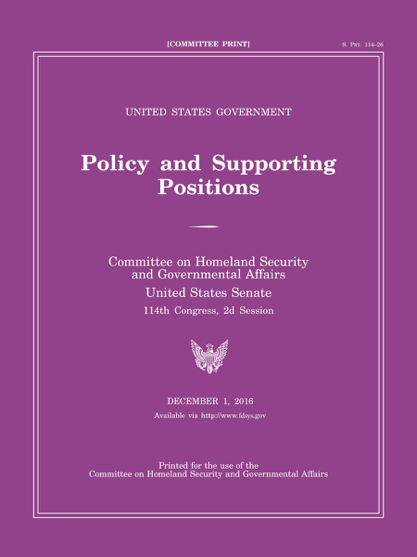
People are policy. With whom Trump chooses to surround himself greatly affects what his administration will accomplish. He has sent nominations to the Senate at a faster pace than most recent presidents, but has struggled to get those nominees confirmed. He trails President Obama on both measures. President Trump has sent 33 appointees to the Senate for confirmation with 18 already confirmed. But cabinet level nominations are simply the tip of a vast political appointee iceberg.
These top aides are just a slice of the thousands of positions Trump’s transition team may need to find appointees for — people who will oversee day-to-day operations at the agencies that make up the executive branch of government.

When President Obama left office on Jan. 20, so did his appointees, which means President-elect Donald Trump can fill more than 4,000 vacancies by presidential appointment in his new administration.
Positions range from high-profile advisers and Cabinet posts to ambassadors, small agency directors and special assistants. Team Trump has already received more than 65,000 résumés from job seekers.
These are positions listed in the Office of Personnel Management’s newly released Plum Book. Trump has said he will trim the bureaucracy, so some may not be filled. (The book actually lists about 9,000 jobs, but about 5,000 of those are nonpolitical and filled with civil servants who don’t usually leave when the president does.)

Roughly 500 appointees do not require Senate approval. These make up the so called “beachhead” teams deployed to various government agencies and departments. The beachhead team members are temporary employees serving for stints of four to eight months, but many are expected to move into permanent jobs. The Trump Administration’s model is based on plans developed, but never used, by the unsuccessful presidential campaign of Mitt Romney. However, personnel asymmetries do not end with appointees. The Administration will need to hone in on congressional differences and change the tone of a jubilant but disorganized ruling party in order to fulfill campaign promises.

Two thirds of this Congress has never served under a Republican president. Many of the Representatives in the House were elected largely as a result of the backlash over ACA in 2010. They must now transition into a governing party that coordinates messages, and pursues policy in an unequivocal manner lest they become victim to their own intransigence. If you are the opposition party, it is quite easy to hold a press conference and show your “10-Point Plan” to save the world. It is quite a different thing to write passable legislation.

Perhaps nowhere is that more true than in the budget reconciliation measures being taken to revise the Affordable Care Act. Without super-majority control of the Senate, Republicans must use a budget reconciliation to dismantle Obama’s signature law. However, using this method has its limitations. They can only focus on funding matters and not on the full scope of the law. The House Budget Committee began marking up its ACA repeal legislation (The American Healthcare Act, AHCA) last Wednesday.

The GOP bill went to the budget panel after a combined 44 hours of debate in two key committees since Wednesday morning. Speaker Paul Ryan (R-Wis.) has said the House will pass the measure, likely over the objections of some conservatives, by the end of March. The House Ways and Means Committee approved the bill, and the House Energy and Commerce Committee completed its 27-hour markup yesterday.

The debate over the AHCA is but the warm-up to the greater budget race about to start. On Thursday, March 16 at 7 am, president Trump released his ‘skinny’ budget. A president’s budget is more of a wish list than anything else, and this blueprint will face tough scrutiny in the congressional appropriations process, which turns the budget request into law.

It is important to remember that the President’s budget is the initial step in the federal budget and appropriation process. Before any spending is finalized, the House and Senate must pass spending bills for the President to sign. Many members of Congress – Republicans and Democrats – have expressed skepticism about the budget, even before it was announced and Thursday’s release increased those doubts.
While there is a long road to a final spending bill, this proposal is an important bellwether for how Trump and his administration view the federal budget and government spending.

Campaigning is easy, governing is hard. The sheer magnitude of interest groups pushing for their slice of cake adds a layer of fury to the mess of government. Perhaps our founding fathers designed it to be this way. Too much efficiency can mean there is a great deal of concentrated power. As the old adage goes, you may campaign in poetry, but you govern in prose.

A Day of Advocacy

When it comes to advocacy days in the Capitol, the first line is the bottom line. Members of Congress and their staff like facts, they like research, and they love it when smart, even-handed academics convey the benefits of their work. Last week, the Dean of Duke’s Pratt School of Engineering Dr. Ravi Bellamkonda journeyed up to Washington, D.C. to open dialogue in times of uncertainty and to fulfill precisely that role of communicator.
With colleagues from other North Carolina universities, the Dean shuffled between congressional offices illuminating the concerns of the engineering education community. From the need for stable research funding and higher budget caps, to the importance of research in infrastructure planning and the value of a robust research enterprise for local economies, there was an abundance of topics to cover.

In some ways, the most difficult part of the Dean’s job was picking and choosing which elements of the Duke research enterprise to share with lawmakers. Apart from the inherent value of new technologies emerging from Duke labs, the Dean, per his position as both an administrator and an academic, also conveyed the larger difficulties of running a large-scale research institution in tumultuous times. How can our scientists conduct long-term research on medical device implementation when budget projections are so unknown?

As an ambassador for the Duke community, the Dean’s areas of concern were not limited to science and technology. He also shared a timely message on the impacts the recent immigration Executive Order had on the Duke family. Adding in personal vignettes and putting a face on the effects of policy decisions helps color an otherwise political decision for lawmakers. The value of an advocacy day is perhaps best illuminated when advocates of one field are able to reach across disciplines to bring in the importance of another.

But the Dean was not simply a conduit for policy proposals; he is proof of their success.  A graduate of Osmania University (India), Ravi Bellamkonda then attended Brown University on an immigrant visa to pursue his PhD and eventually did his post-doctoral training at MIT.  Bellamkonda is no stranger to international education and the value of borders open to research collaboration.

By partnering with government programs and reiterating the benefits of that work to our elected leaders, we can better enforce a cycle of educated policymaking. There is an intersection between what Duke is good at doing and what is worth doing, and we must continually ask what can our research programs produce that is meaningful in the world. This is the strength of Duke. This gives us a differential advantage. But it is also the strength of Dean Bellamkonda.

So our advice for when you come to the Capitol to share research is to come with facts. Come prepared to engage and debate. But also come with perspective. Dean Bellamkonda’s strengths were not limited to his engineering acumen. For the Dean’s visit to the Capitol, the values of diversity, research, and a free and open academic environment are simply facts of life.

Letter from the President

Editor’s note: The following letter was sent Thursday February 2 to President Trump by 48 U.S. university leaders.

Dear President Trump:

We write as presidents of leading American colleges and universities to urge you to rectify or rescind the recent executive order closing our country’s borders to immigrants and others from seven majority-Muslim countries and to refugees from throughout the world. If left in place, the order threatens both American higher education and the defining principles of our country.

The order specifically prevents talented, law-abiding students and scholars from the affected regions from reaching our campuses. American higher education has benefited tremendously from this country’s long history of embracing immigrants from around the world. Their innovations and scholarship have enhanced American learning, added to our prosperity, and enriched our culture. Many who have returned to their own countries have taken with them the values that are the lifeblood of our democracy. America’s educational, scientific, economic, and artistic leadership depends upon our continued ability to attract the extraordinary people who for many generations have come to this country in search of freedom and a better life.

This action unfairly targets seven predominantly Muslim countries in a manner inconsistent with America’s best principles and greatest traditions. We welcome outstanding Muslim students and scholars from the United States and abroad, including the many who come from the seven affected countries. Their vibrant contributions to our institutions and our country exemplify the value of the religious diversity that has been a hallmark of American freedom since this country’s founding. The American dream depends on continued fidelity to that value.

We recognize and respect the need to protect America’s security. The vetting procedures already in place are rigorous. Improvements to them should be based on evidence, calibrated to real risks, and consistent with constitutional principle.

Throughout its history America has been a land of opportunity and a beacon of freedom in the world. It has attracted talented people to our shores and inspired people around the globe. This executive order is dimming the lamp of liberty and staining the country’s reputation. We respectfully urge you to rectify the damage done by this order.

Sincerely,

Richard H. Brodhead
President
Duke University

A Year of Known Unknowns: 2017 Rounds the Corner

As a new Congress hits the ground running, we are keeping track of activity that will impact the Duke community. Cordialities did not last long after the 115th Congress was sworn in on January 3rd. Between debates over the future of the Affordable Care Act, the closing of Guantanamo Bay, Russian hacking, and preparations for the Inauguration, DC is buzzing with speculation. But instead of fretting over so many unknowns, we decided to take a break and detail what we can actually expect in 2017. This past year taught us that we cannot fully predict what may happen at every turn, but we do have an idea of some important dates for when major shifts may come. The following is a collection of policy issues and dates that may impact the Duke community in 2017.

January 3rd

Senate began consideration of a new FY17 budget resolution.  The Senate voted to proceed to consideration of the FY17 budget resolution introduced January 3rd by Senate Budget Committee Chairman Mike Enzi (R-WY). The measure (S. Con. Res. 3 ) sets up a fast-track process for repealing the Affordable Care Act. It maintains the $1.07 trillion discretionary spending cap for FY17 approved in the Budget Control Act, without additional funding for defense or cuts to nondefense.

January 17th

Originally scheduled for January 11th, Betsy DeVos will face her confirmation hearing for Secretary of Education. DeVos has spent two decades advocating for charter schools and taxpayer-funded school vouchers.  Some Republicans are hopeful that DeVos will oversee a shrinking of the federal footprint in education.  Very little is known of her positions on higher education.

It is for this reason that the confirmation hearing headed by Sen. Patty Murray (D-Wash.), ranking member of the education committee, will be insightful for the Duke community.  Senator Murray has said that she will ask DeVos to explain her plans to address college affordability and student debt as well as DeVos’s views of campus sexual violence.

Other confirmation hearings started January 9th.  We particularly like the following link with schedules and top issues:

Trump’s Cabinet Picks: A Rundown of Upcoming Hearings

January 11th is also the first day of classes for the Sanford School’s Duke in DC and UNC’s Public Policy study abroad students. Internships range from Capitol Hill and think tanks to government departments and major consulting firms.  Although technically in separately-run programs, studying in a shared office space offers students the chance to overcome Triangle rivalries in the name of productive policy discourse.

January 20th  

President-elect Trump becomes the 45th president of the United States.  We expect a flurry of executive orders and bill signings during the immediate hours after President-elect Trump is sworn in. Transition team spokesperson and incoming Press Secretary Sean Spicer has signaled that “a lot” of Obama’s actions will be repealed, with a focus on reducing regulation and promoting job growth.

Of primary concern is what the upcoming administration might do to Obama’s Executive Order Deferring Action for Childhood Arrivals (DACA).  DACA allows the children of undocumented immigrants to attend school in the US without consequence.

January 31st

The open enrollment period ends for coverage through Affordable Care Act (ACA) marketplaces for 2017.  Questions remain as to whether the talk about “repealing Obamacare” will damage enrollment numbers.  Further questions remain as to the impact defunding ACA provisions will have on the healthcare industry.  At the moment, it appears unlikely that students who stay on their parent’s medical plans until 26 years of age will be largely affected.

February

Duke in DC moves to new offices!  From our current home on 12th and New York Ave., we head down the street to 12th and Pennsylvania.  This new space will bring us closer to the action and combines our offices with the Duke Margolis Center for Health Policy. A major expansion, the new office allows us to host events, small conferences, and 25 new colleagues. Look forward to updates and photos to come.

March 16th  

The debt limit ends at 12:01am.  At this point, the Treasury Department can begin using “extraordinary measures” for an unknown length of time until the “true” limit is reached.  However, if Congress does nothing by then, the US will begin defaulting on its national debt.

April 28th  

The current Continuing Resolution (CR) funds the government through this date.  If Congress does not pass another budget or CR, there will be a shutdown.  If there is a shutdown, many government contracts may cease funding and federal contract recipients may be in limbo while the budget is discussed.  This is especially important for researchers and institutes receiving contracts from the NIH, NSF, and any Defense-related entities that are awarded over a period of time.

April 29th  

President Trump completes his 100th day in office. Expect a rush of stories deciding the importance, both historical and political, of the last one hundred days.

Mid-May 

Trump plans to submit FY18 Budget. Senior House appropriator Tom Cole (R-OK) told CQ.com that President-elect Trump plans to submit an FY18 budget to Congress, although that might not happen until May. Rep. Cole said appropriators would welcome the guidance.

Mid-June

The Supreme Court’s term ends.  The current 4-4 split will remain through the next few months but there may be a large decision or two before then.  Democrats have vowed to drag out any confirmation process for Trump’s nominee and so much remains uncertain about when the Court will be back at full-strength with 9 Justices.

Opportunities and Updates

The Office of Government Relations will continue to closely monitor events on the ground and to update the Duke community as concerns and opportunities arise. Follow the Office of Government Relations on Facebook or Twitter and subscribe to our digests to stay better informed on the year ahead and its policy implications.
 

5 Questions with James Luther: Understanding Federal Regulations and University Research

Jim Luther testifies before a congressional committee on oversight of federally funded research.

Jim Luther testifies before a congressional committee on oversight of federally funded research.

Last month, Jim Luther, Associate Vice President of finance at Duke University, appeared before a US House Committee on Science, Space, and Technology subcommittee to reaffirm the research university communities’ commitment to working with federal partners to effectively regulate federal research. 

His testimony, which can be read here, focused on the — sometimes unintended — impact of federal regulations on researchers and administrators on university campuses, but also outlined important steps institutions and the federal government can take moving forward to increase understanding and collaboration.

OGR: What was the topic of your testimony? What experience did you draw upon when preparing your remarks?

Luther: My testimony focused on the need for and potential to reduce regulatory burden, specifically for faculty in their conduct of research.  Our Nation invests $63 billion of taxpayer funds for research & development and universities fund another ~$16 billion; and we, the University community, need to work with federal partners to ensure we use these funds in a responsible AND efficient manner.

I have worked at Duke for more than 25 years in varying capacities and have, for the past decade, routinely interacted with our federal partners at the Office of Management and Budget (OMB), and the National Institutes of Health (NIH).  In my interactions with departmental administrators and faculty, it’s clear that everyone who’s involved desires to have an environment that allows our faculty to conduct the great research for which Duke is known. This can only happen if we reduce regulatory burden and let faculty focus on their research, a point I tried to illustrate with my testimony.

OGR: How do federal regulations impact research at universities in general, and Duke specifically?

Regulations are critical and they protect human subjects, animals, the integrity of the science, the environment, and researchers themselves. But without appropriate oversight, complying with federal regulations can adversely impact universities in two primary ways. First, the administrative investments required for personnel, training, and technology systems divert funds away from programmatic support, whether that be academic or research programs. More importantly, however, more and more faculty are pulled into the regulatory quagmire themselves.  Per a recent study, 42% of a faculty member’s sponsor funded time is spent on administrative and compliance activities, which, when you think about it, is a staggeringly high opportunity cost for the time and focus of these researchers. Every minute spent on unnecessary regulations is time away from the research lab.

Jim Luther greets Rep. Dan Lipinski (D-IL, G '98), the subcommittee's ranking member, following the hearing.

Jim Luther greets Rep. Dan Lipinski (D-IL, G ’98), the subcommittee’s ranking member, following the hearing.

OGR: What message or messages do you hope Members of Congress and their staff took away from today’s hearing?

Luther: I hope the Members of Congress and their staff heard the passion and commitment of universities to work with federal partners to ensure effective oversight and efficient use of taxpayer funds. It’s one of the reasons the university community is supporting H.R. 5583, the University Regulatory Streamlining and Harmonization Act of 2016, which proposes a Research Policy Board, composed of federal and university officials charged with reviewing existing and proposed regulations with the goal of reducing regulatory burden.

It’s clear that the burden is becoming overwhelming and is not sustainable. A report by the National Academies found that on an annual basis, there are 5.8 new or substantially changed regulations. These new regulations and policies will cost universities anywhere from several hundred thousand to several million dollars and result in a significant increase in administrative and faculty workload.

OGR: Conversely, what is important for Duke faculty to know about complying with federal regulations and guidelines?

Luther: Again, I think there are two things: the first is that the regulatory environment at the federal level is quite complex with many regulations that address important programmatic and safety aspects of research, and others regulations that create a tension by focusing on reducing fraud, waste and abuse.  And while it’s complicated, if a faculty member either unintentionally or willfully ignores these regulations, it can have a very significant impact on both the individuals as well as Duke’s standing with the federal government and ability to accept federal funds in the future.

Second, and most importantly, the Duke University leadership and administration is extremely supportive of faculty and want to minimize the regulatory burden that faculty bear, both Duke and federally induced.  Duke, through, for example, Research Administration Continuous Improvement (RACI), has made a significant investment in personnel resources, systems support, and training and education, to provide support to our faculty and I, along with my colleagues, stand ready to marshal these resources so that we can support our researchers to do what they do best – focus on groundbreaking research.

OGR: Any final thoughts?

In closing, there is a real commitment both on the part of universities and our federal partners to address these issues. Given the amount of critical issues the Congress must resolve before they adjourn – and the short timeframe in which they have to work — there may not be enough time to complete work on these issues right away, but follow-up conversations have already occurred with Congressional Committee staffers in Washington and we expect these to continue.

Elections, Congressional Funding on Our Radar this Fall

Capitol and reflection pond

As classes resume on campus, the election looms, and the federal government funding remains uncertain, questions inevitably arise regarding the state of politics and its impact on the Duke community. Congress, when it returns to Washington, D.C. on September 6, aims to pass a measure to keep the federal government open past Sept. 30. Two months after Congress returns, the candidates will be preparing their closing arguments and potential administrations.
The Office of Government Relations (OGR) is closely monitoring both situations and will continue to provide updates to the Duke community on developments relevant to University activities.

CONGRESSIONAL ACTION

Before adjourning for the annual August recess, the House and Senate Appropriations Committees passed all twelve individual spending bills out of committee, but only a handful had been debated or passed on the floor of either chamber. None have been signed into law. As of now, Congressional leaders have yet to indicate a realistic path to a legislative solution, but are widely expected to move forward with either an Omnibus, Continuing Resolution, or a combination of both.

An omnibus would combine several or all of the twelve spending bills in one legislative package. Through an omnibus, Congress would have the ability and flexibility to allocate funding levels which may have been already determined in various committees, but not yet agreed to by the Senate and/or House. A Continuing Resolution (CR) would maintain the current funding levels for a specified amount of time, such as through the election or into 2017.

In conversations with members of the North Carolina delegation and staff, there is a high level of uncertainty over which path leadership will choose. OGR staff will continue to closely watch the appropriations process and provide updates as new information becomes available and decisions are made.

For an overview of the Congressional appropriations process, visit the OGR blog entitled “Where the Rubber Meets the Road.”

PRESIDENTIAL CAMPAIGNS

As the Presidential campaign enters its final two months, the candidates are continuing to release policy statements and position papers on a wide variety of issues affecting higher education. Meanwhile, they are continuing to expand their staffing organizations, while simultaneously preparing for potential transitions to the White House.

In early August, Duke University joined with members of the academic, research, and business communities in sending a letter to both the Hillary Clinton and Donald Trump campaigns, urging the candidates to support policies and positions that would promote research funding, immigration reform, and other policies affecting higher education.

Hillary Clinton and Donald Trump have both highlighted a number of issues that would impact the university community including investments in research, student aid and immigration. OGR staff is closely monitoring positions by the candidates as they evolve and are actively participating in dialogue with the campaigns to best represent Duke’s interests.

Likewise, as the campaigns continue to expand their staffing operations, OGR staff are watching who is advising the candidates on various issues. Of course, OGR staff are keeping an eye on those advisors with Duke connections and who would likely become officials in the White House or key agencies.

On Aug. 24, Monmouth University released polling figures for the President, Senatorial and gubernatorial races in North Carolina.]]>

The Campaign: Preparing for a general election season

As the Republicans head to Cleveland and the Democrats to Philadelphia for their party conventions, many could be forgiven for assuming the general election has already begun. After all, the parties have had their presumptive nominees for months and the political ads have been flooding the airwaves for even longer.

But until the delegate votes are cast and counted on the convention floor, the nominees are still just presumptive and the primary season continues.

In North Carolina, a state many pundits are calling a toss-up when it comes to the presidential race, there are also competitive senatorial and gubernatorial races. In other words, prepare yourself — it will be a very active fall on campus and throughout our home state.

So find some extra patience for the numerous political ads, candidate visits and phone calls to come — but also, take a look at Duke University’s guidance regarding campus political activity and engagement with government officials. The information, which is located on our office website, provides general guidance to members of the Duke community as they consider their engagement with various political actors.

This information is based on guidance from the Office of University Counsel, but it does not address every situation nor does it constitute legal advice. If questions arise, please do not hesitate to contact the Office of Government Relations.

Please take the time to familiarize yourself with the situations the guidance does address — including employees speaking out on political issues, their involvement in political campaigns, candidates appearances on campus, and speaking invitations to candidates from faculty and student groups.

But here’s the big thing to know: as a non-profit, tax-exempt entity, Duke University must abide by Federal and state laws prohibiting the use of its facilities, funds, services, personnel or other resources to support or oppose individuals or organizations campaigning for public office.
So when considering an action, ask these questions:

  • When speaking on behalf of a candidate, am I making sure to note that my views are not those of the University?
  • If distributing campaign materials, am I using my personal email and computer?
  • If inviting a candidate to speak on campus, am I working with the Office of Government Relations to make sure all of the rules are being followed?
  • If advising a campaign, are you doing so on personal time and using personal resources?

As mentioned earlier, the Office of Government Relations stands ready to answer further questions and offer guidance in specific situations.

The Interns Go to Washington

Students gather at Duke in DC to hear internship advice from a panel of area alumni.

Students gather at Duke in DC to hear internship advice from a panel of area alumni.

Each summer, dozens of Duke undergraduate and graduate students head to Washington, D.C. for a chance to complement their academic classes with real-world experience through internships with government agencies, non-profits or D.C. firms. The students also have the opportunity to experience the Duke community first-hand, with networking events like a recent panel on how to make the most of their internships taking place throughout the summer.

Name: Himanshi Jain
Year: Second Year, Masters of Public Policy
Internship:  
World Bank, Social and Labor Division

What have you learned through your internship?

At the World Bank, I am researching on disability insurance across Europe. While working on this project I realized that one can learn country specific information only through building relationships with the stakeholders in these countries. It is important to remember that policy is always connected to people. Analyzing policy would first entail understanding what is written in the law and then evaluating it’s implementation on the ground. The people who best understand the gap between the law and the implementation are those who work with the policies day-to-day, the stakeholders.

Name: Hunter Buckworth
Year: Second Year, Masters of Public Policy
Internship: Office of Budget and Management

How did your classes prepare you for your internship experience?

The networking and relationship building skills that Sanford helps us build have helped me get to know and work easily with those in my office and throughout the agency. When my supervisor gives me a task to manage, the writing and speaking skills I’ve developed at Sanford help me to jump in with confidence to contact the staff members I need to to complete the task. That’s been really helpful, especially as the OMB has been a flatter organization than I expected. Everyone is open to hearing opinions, which is a great opportunity as an intern.

James Hwang
Year: Sophomore, Trinity College of Arts and Sciences
Internship: Broad Institute

What’s surprised you during your internship experience?

At the internship panel, I met an alumnus who worked on passing the law I’m now analyzing for my internship. It wasn’t a conversation I was expecting to have, but it took the work I was doing — trying to find ways to improve the law as implemented — from being theoretical to being a real-life experience. He let me know that he was open to further conversations about the policy if I had questions. So the conversation was a reminder of what type of Duke alum’s are in the area, one’s that have great experience, but are also willing to to be a resource to current students.

Name: Jazmin Harper
Year: Second Year, Masters of Public Policy
Internship: Federal Reserve, Community and Consumer Affairs Division

How will this internship influence your approach to your second year at Sanford?

At my job, I’ve been taking initiative and being proactive in looking for projects and jobs through which I can help the office. It makes excited to return to Durham and take a look at local non-profits, see what kind of projects they’re working on and how I can help. Sanford is great at connecting students to the community and I’m looking forward to taking even better advantage of that in my second year.

Page 12 of 18

Powered by WordPress & Theme by Anders Norén